RELATED LINKS




 Rome Toolkit
  Paris Toolkit
 Dover Castle and White Cliffs of Dover
Overview for travellers passing through Dover or on day trip from London
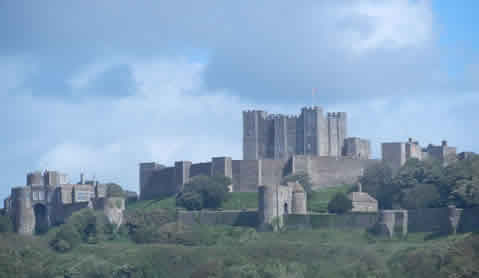
Dover, with its key geographical location as the nearest point to France from England, has always been a natural place to fortify against possible foreign invasion. Dover Castle sits strategically upon the famous White Cliffs of Dover, overlooking the port and town far below.
Way back before the Normans started building castles in England the site was originally an Iron Age hill fort, and later housed a Roman lighthouse and later still an Anglo-Saxon church, part of a Saxon fortified settlement.
Dover Castle history
After the Norman invasion, William the Conqueror raised the first Dover Castle in earth and timber soon after invading England in 1066. From then on the castle was garrisoned uninterruptedly until 1958, a continuous nine-century span equalled only by the Tower of London and Windsor Castle.
Secret wartime tunnels were dug deep beneath the castle, within the 'White Cliffs' themselves. For many the tunnels are the highlight of a visit.
Today you can tour the secret wartime tunnels. Dover Castle, the Roman Lighthouse and much more. There is much to see, an average visit taking a whole morning or afternoon. Dover Castle is open daily from 10am (9.30am in August) until late afternoon.
The Castle although not far from the town centre is up a continuously steep uphill for 10-15 minutes. If you don't fancy the climb there is an hourly public bus or taxis.
The White Cliffs of Dover
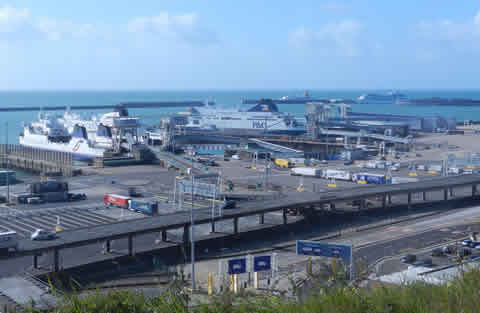
From Dover Castle it's a 20 minute walk to the Dover Cliffs Visitor Centre (signposted). On the way you can make a small diversion to where Bleriot landed after making the first manned flight across the English Channel.
You can follow public footpaths down into Dover Town coming out close to the ferry terminal.
The famous White Cliffs of Dover are best seen from out at sea, not when you're standing on top of them! For those who aren't able to view them from a ferry or cruise ship there is a pleasure boat service that runs out of the port in Dover.
For those who have their own transport there is a White Cliffs Visitor Centre up on top of the cliffs run by the National Trust. This is just to the east of Dover Castle, there is a parking charge if you are not a member of the National Trust.
Unfortunately it's a very steep walk from Dover town up to the top of the cliffs. There is a public bus you can get to just past Dover Castle at the top of the hill but it's still a 15 minute walk the visitor centre from there.
There is a great view from here down into the ferry port directly below, a very nice cafe/restaurant and short or long walks can be taken along the cliffs.
About 45 to 60 minutes' walk along the cliffs is South Forland Lighthouse which is open for tours for much of the year.
Travelling to Dover from London independently
The two ways of coming to Dover from London by public transport is the railway from London's Victoria, London Bridge, St Pancras or Charing Cross Stations or the cheaper, slower National Express coaches from London Victoria.
We have dedicated pages detailing Dover train services and Dover coach services between Dover and London and its airports.
Dover Cruise Ship transfer from London stopping at Dover Castle

A value for money, dependable transfer that collects you from your Central London or Heathrow Airport hotel and takes you to your waiting cruise ship at Dover. At Dover you can go straight to your cruise ship or opt to visit Dover Castle.
The bus will make a brief stop at Dover Castle before going onto the cruise ship. If you want to make a visit to Dover Castle you leave the bus which will then come back to the castle a couple of hours later so you can complete your journey to the cruise ship.
The service picks up from hotels in all the major Central London hotel districts as well as selected hotels at Heathrow Airport before going onto Dover.
Dover Castle & Canterbury Day Tours from London
There is a regular scheduled day tour from London that visits Dover Castle and also visits Canterbury.
The other tour that visits Dover Castle is a small group tour also including Canterbury and a drive through the beautiful villages of Kent.
There are other day tours that include visits to Dover but on these tours Leeds Castle and Canterbury are the main destinations visited and Dover is just a lunch/photo stop for the famous White Cliffs of Dover.
The two tours that include Dover Castle can be seen in the banners below.

CANTERBURY AND DOVER
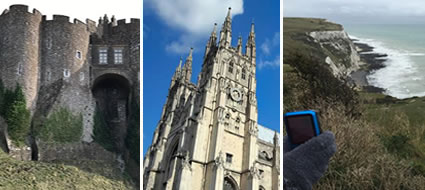
Canterbury Cathedral, Dover Castle and White Cliffs of Dover
Adult from £125 • Child (5-17 years) from £115
• Entrance to Dover Castle • Walk along the White Cliffs of Dover • Entrance into Canterbury Cathedral • Travel by air-conditioned vehicle • Professional guide
SMALL GROUP CANTERBURY, DOVER & KENT VILLAGES
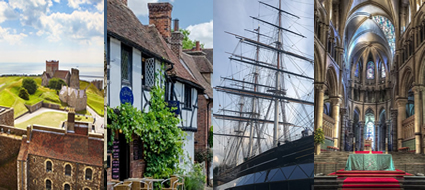
White Cliffs of Dover, Canterbury and time for Dover Castle
Adult £139
• Max 16 people per tour • Stop by the White Cliffs of Dover • Walking tour of Canterbury with time to visit Canterbury Cathedral (admission extra) • Time to visit Dover Castle (entrance extra) • Stop in beautiful Chilham • Travel by executive minicoach, with expert guide
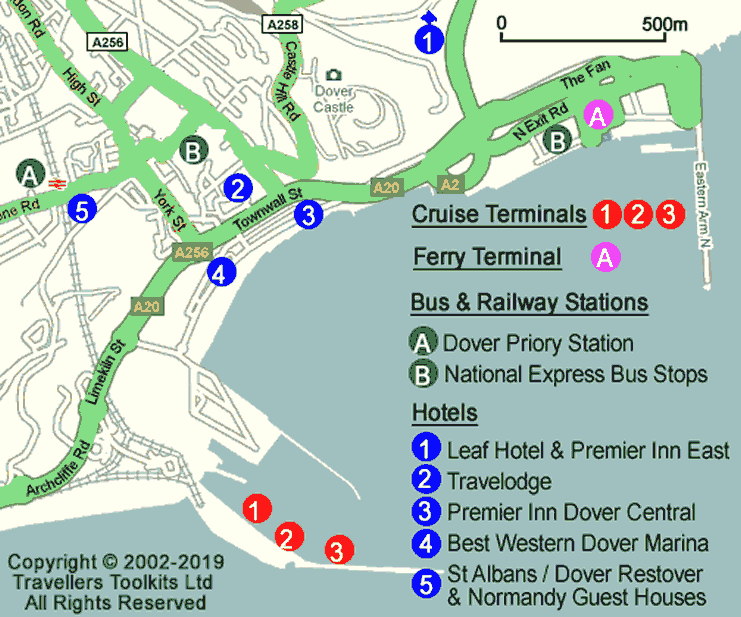
Dover map of cruise & ferry terminals, hotels and bus & railway stations

TRAIN TICKETS